
Over the weekend, Harrell brought up a local non-profit Friends of Trees, and asking the social practice students..
http://www.detroitagriculture.org/Default.htm
http://northeastwestsouth.net/site/node/194
http://monthlyreview.org/081222straub.php

Over the weekend, Harrell brought up a local non-profit Friends of Trees, and asking the social practice students..
http://www.detroitagriculture.org/Default.htm
http://northeastwestsouth.net/site/node/194
http://monthlyreview.org/081222straub.php

I’m working on a project with Ariana Jacob and Amber Bell that aims to make a vending cart of maps made by people from Portland.
I came across a link to the projects being created by Art House Co-op of Atlanta, that I think run parallel to our idea in the way that we both are attempting to make collections of subjective information. Art House is collecting and displaying items from their audience such as 10,000 interpretations of one word, or 20,000 objects that relate to keeping time. I don’t think that I’m as interested in reaching certain numerical goals, but a collection of time-keeping objects seem pretty interesting.
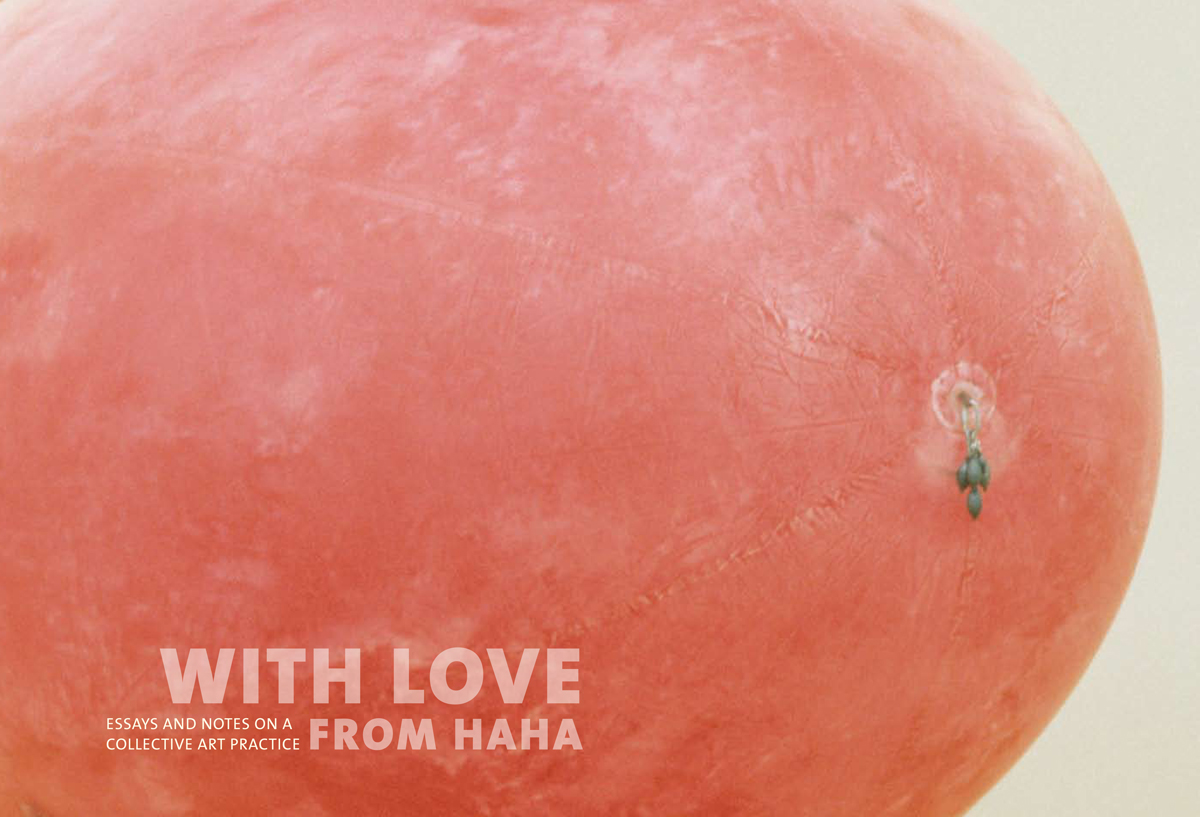
I’ve been finding inspiration in this book, the final project by the members of the art group Haha, Wendy Jacob, Laurie Palmer, and John Ploof. I wasn’t aware of Haha’s work until reading about them in Group Work last spring, and have been surprised to learn that their group interest focused around collective conceptions of place and space, among other things.
I am reading and re-reading “Haha as a Catalyst for Collective Memory” by Doug Ashford and “Getting Lost and the Localized Mind” by Franco La Cecla. Each of these essays is expanding my vocabulary for describing shared social memory and how that shared memory relates to place.
Just catching up on some posts. Here is the image from the card Junior Ambassador and I sent out this year celebrating our first Rumball Season as Mostlandian Citizens.
Inspiration:
Labels: Mostlandia
Labels: suddenly
This article in Oregon Humanities Magazine profiles several social practice artists working in Portland, and includes some words I had to say about my work with the The M.O.S.T.
Labels: MOST, publications